In 2026, selecting new finance software is no longer a simple ‘IT upgrade’. It is a high-stakes leadership decision that dictates your ability to control costs, gain real-time insights, and scale without friction.
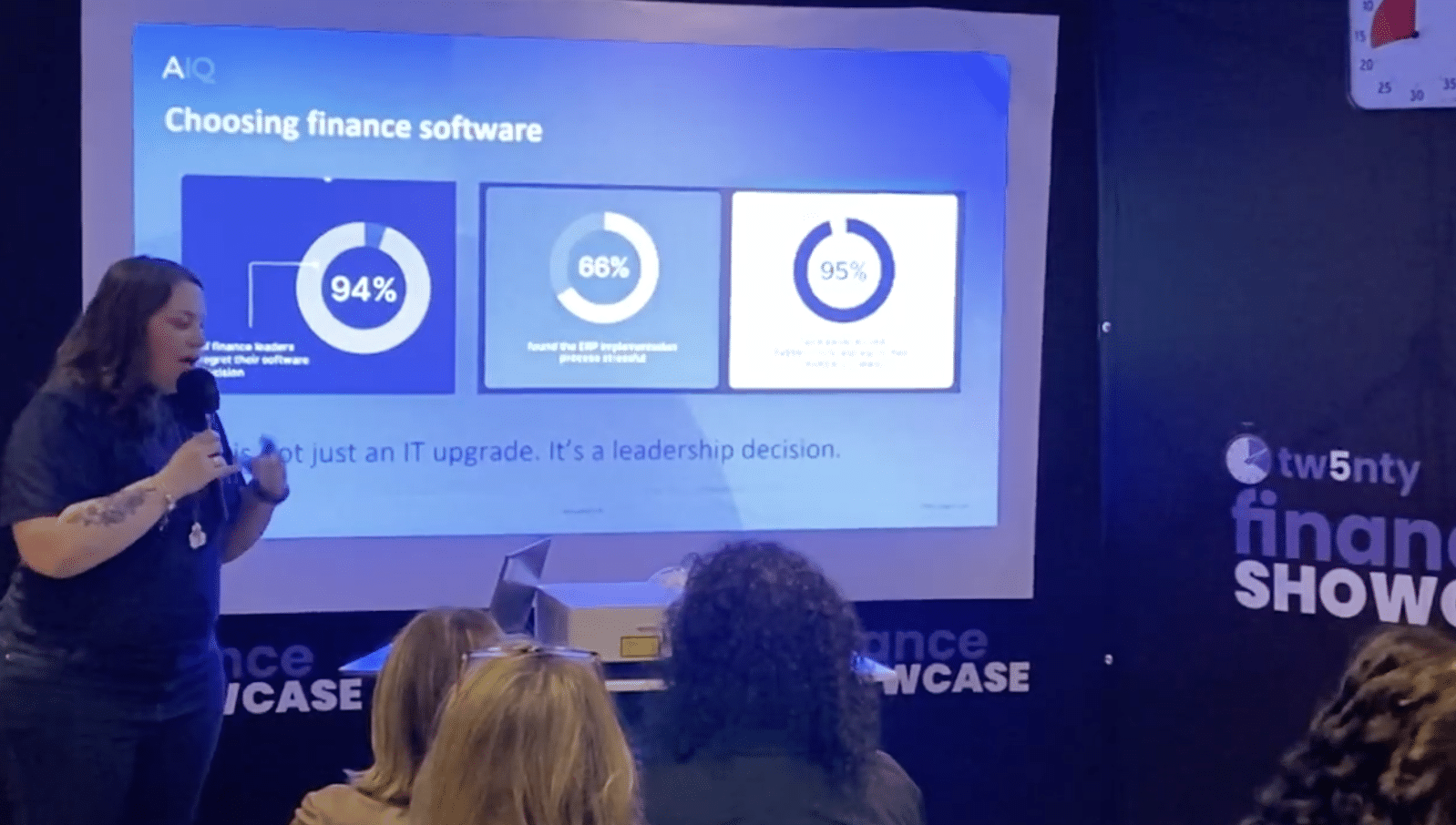
At a recent financeSHOWCASE, Elaine Birch from AccountsIQ delivered a sharp ‘5 in Twenty’ session aimed directly at the C-suite. Her message was a wake-up call for senior leaders: if you focus only on the features and the initial price tag, you are likely walking into a procurement trap.
The implementation reality check
One of the most frequent causes of project failure isn’t the software itself – it’s a misalignment regarding the journey to ‘Go Live.’ Elaine’s advice is to peel back the curtain on the sales pitch and get honest about the timeline.
She stateS:
“Think about how long it’s actually going to take to implement. Really talk to providers about what onboarding support they have available. How are they going to help you get through that transition? What do they do when the inevitable challenges arise?”
Implementation isn’t a ‘set and forget’ process. It requires a partner who provides a clear roadmap and a support structure that doesn’t vanish once the contract is signed. Before committing, you need to understand the provider’s onboarding capacity and their track record for handling the hurdles that appear during data migration and team training.
Lesson 3: The ‘total cost’ trap
Perhaps the most staggering point Elaine shared was a statistic that should give every CFO pause: 95% of people reported experiencing unexpected costs related to buying software.
This isn’t a problem exclusive to massive ERP overhauls; it happens with starter software and mid-market solutions alike. To make a smart business decision, you must consider the Total Cost of Ownership (TCO), not just the initial quote.
When calculating your ROI, you need to factor in:
- Hidden integration costs: Getting your existing tech stack to “talk” to the new platform.
- Internal resource drain: The cost of your team’s time during the implementation phase.
- Ongoing support & training: What happens when you hire new staff or need to scale a new module?
- Data maintenance: The long-term costs of hosting and managing your financial information.
Procurement is a strategic skill
As Elaine emphasised, smart procurement is about looking past the ‘shiny’ interface and investigating the foundations of the partnership. By understanding the true timeline and the comprehensive cost structure, you move from ‘buying a tool’ to ‘investing in a strategic asset.’
Get the full leadership guide
Want to see Elaine’s other four critical considerations for software selection? Her ‘5 in Twenty’ session is a masterclass in strategic procurement for the modern finance leader.
For more content, along with a guide on future-proofing your tech stack, go to theHUB.
Watch “What Finance Leaders Must Get Right” on theHUB here.
Don’t miss out on the latest tips for Finance Teams. Get your FREE tickets now for financeSHOWCASE Leeds. Just click here