The decision has been made. You’ve signed the contract for a shiny new unified finance platform, and the promise of automated reporting and real-time visibility is finally within reach. But as any seasoned Finance Director knows, the bridge between the old world and the new is a treacherous one called Data Migration.
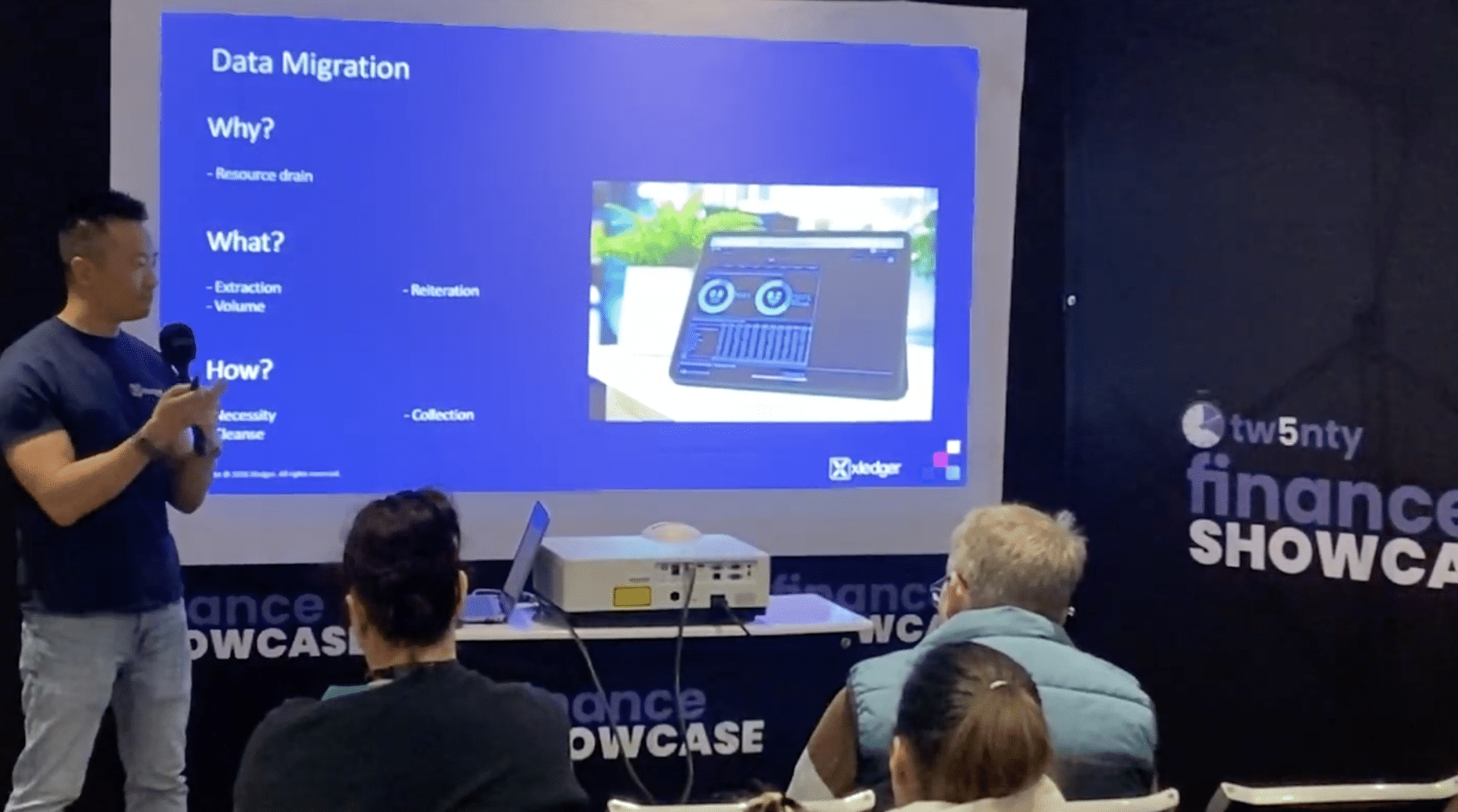
At a recent financeSHOWCASE, Zheng Zeng from Xledger delivered a ‘5 in Twenty’ session that should be mandatory viewing for anyone embarking on a system change. His focus wasn’t just on the technical “how,” but on the strategic “what.”
Specifically, he challenged one of the biggest myths in finance: The 7-Year Hoard.
Data migration: is your history a burden?
When preparing for a move, the natural instinct is to bring everything. We tell ourselves it’s “nice to have” seven years of historical transactional data right there in the new system. We want the comfort of the past as we step into the future.
But as Zheng pointed out, that ‘comfort’ comes with a massive price tag.
“It’s nice to have 7 years’ worth of data bringing to a new system. That’s going to take a massive amount of resource to get that in. Does it definitely need to be in the new system?”
The reality is that data migration is rarely a “copy and paste” job. It requires mapping, cleaning, reconciling, and testing. The more data you bring, the higher the risk of project delays, budget overruns, and “dirty” data polluting your clean new environment.
The ‘Auditor-proof’ alternative
Zheng’s advice is to stop viewing the new system as a museum for your old transactions. Instead, ask yourself three critical questions before you move a single row of data:
- Is it a necessity or a luxury? Will your team actually analyze 2019’s travel expenses in the new system, or do they just need the opening balances to get moving?
- Can it live in an archive? Does the data need to be in the live environment, or can you satisfy your requirements by running ad hoc reports in Excel or a flat-file archive?
- What does the auditor truly require? Most compliance and audit requirements can be satisfied by maintaining access to the legacy data in a read-only format. If you can provide the auditor with the necessary reports without cluttering your new system, you’ve won.
The lean implementation strategy
By being ruthless with your data necessity, you don’t just save time; you ensure a “smoother” implementation. A lean data set means faster testing, easier reconciliation, and a team that can focus on learning the new system’s features rather than fixing old data errors.
As Zheng emphasized, a successful implementation isn’t about how much of the past you bring with you—it’s about how quickly you can start generating value in the future.
Hear the full implementation blueprint
Want to hear Zheng Zeng’s other four tips for a frictionless finance transition? His full ‘5 in Twenty’ session is a masterclass in project management for the modern finance team.
You can watch the full recording, plus grab the implementation checklists, over on theHUB.
Watch “Smooth Finance System Implementation” on theHUB here.